Saying it in Kristang
Papiá Kristang, the creole of Melaka’s Portuguese-Eurasian community, has been spoken for five centuries. Whether it is still spoken in fifty years depends on what happens now.
2 min read
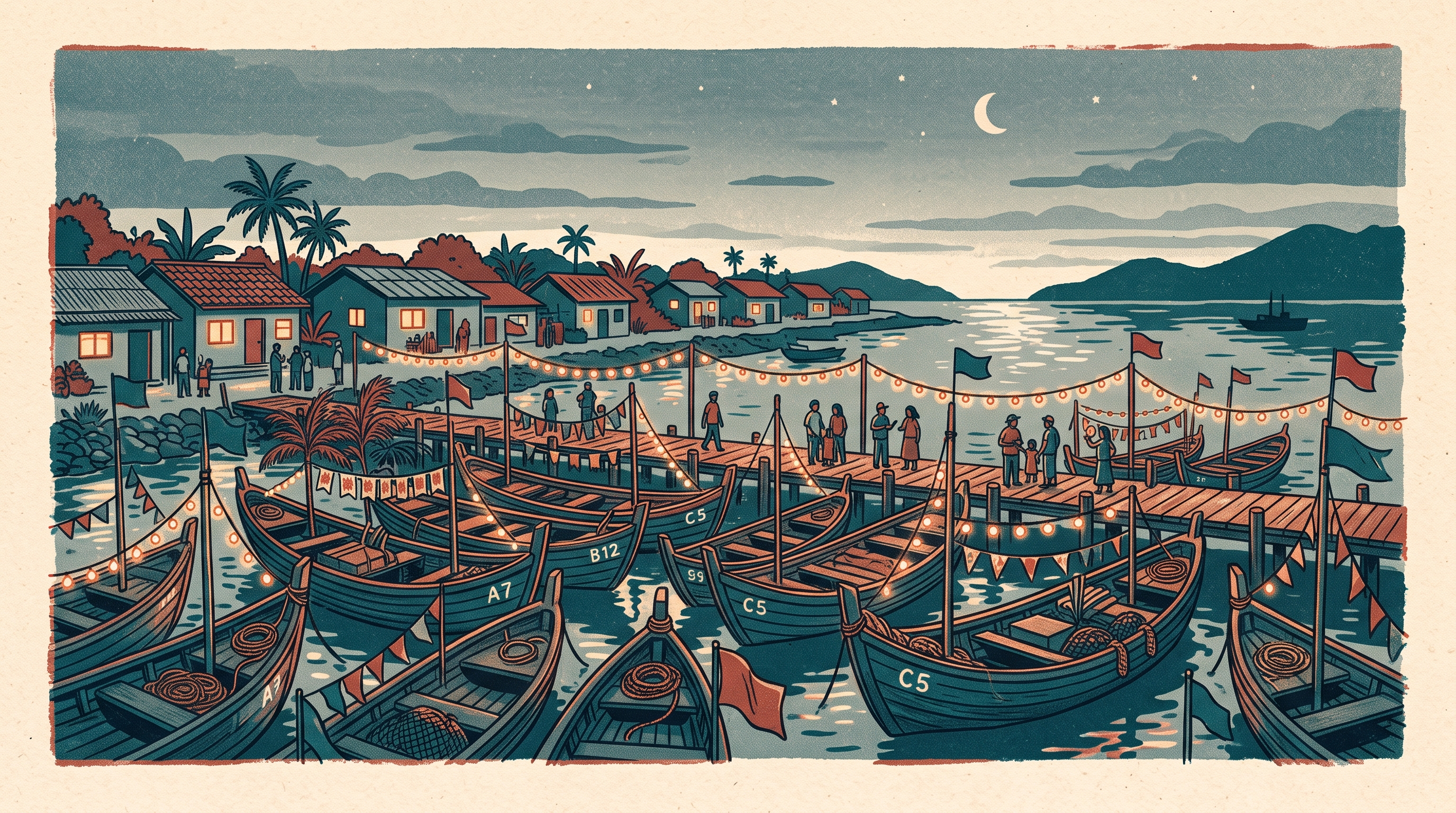
Walk down to the Portuguese Settlement at Ujong Pasir on a June evening and you may hear a language that was born in Melaka. It sounds a little like Portuguese and a little like Malay, with borrowings from the other languages of the port, and its grammar belongs fully to neither. Its speakers call it Papiá Kristang, or simply Kristang.
Kristang grew up in the decades after 1511, among the families of Portuguese sailors and soldiers and the local women they married. For centuries it was the home language of the community. It survived the Dutch, who restricted Catholic worship, and the British, who took little interest in it. Fishermen used it at sea and grandmothers used it in the kitchen. It is the language of Festa San Pedro, held each year around 29 June in honour of the patron saint of fishermen, when the boats are decorated and blessed.
A language in danger
In the second half of the twentieth century, that changed quickly. Schools taught in Malay and English, jobs required them, and parents who wanted the best for their children spoke to them in the languages that would help them get on. Estimates of fluent speakers today range from a few hundred to a couple of thousand, most of them older, and Kristang is counted among the world’s endangered languages. Many younger people in the community understand some of it. Far fewer can hold a conversation.
Learning it back
A quieter story runs underneath this one. Over the past decade, members of the community and enthusiasts beyond it have started teaching Kristang again, through weekly classes, songbooks and dictionaries, recordings of elderly speakers and lessons online. One of the best-known efforts began across the causeway in Singapore, where a group of mostly young volunteers set out to revive the language in 2016 and found far more interest than they had expected. In Melaka, community leaders have pushed for the language to be taught to the Settlement’s children and heard again at its festivals.
No one involved pretends this is easy. A language survives when children use it with each other in the playground, not when adults study it on weekday evenings. But revival movements elsewhere, from Hebrew to Welsh to Hawaiian, show that a language does not have to disappear just because one generation stopped speaking it at home.
What a city keeps
Melaka is good at preserving buildings. It has had less practice preserving the things that cannot be painted: a recipe, a dance, a way of speaking. Kristang is a test of whether it can do both. If the language survives, it will be because enough people decided that a five-hundred-year-old conversation was worth continuing, and started, haltingly, to join in.
Filed under the future tense
