Land from the sea
Melaka’s shoreline has moved a long way in a single generation. As the sea begins to rise, the city has to decide which way the line should move next.
2 min read
Stand at the Porta de Santiago and try to picture the sea. When the Portuguese built A Famosa, its walls ran down to the water, and ships anchored within range of its guns. Today you would have to walk past a shopping mall, a park and a string of hotels before you reached the shore. The old city did not move. The land did.
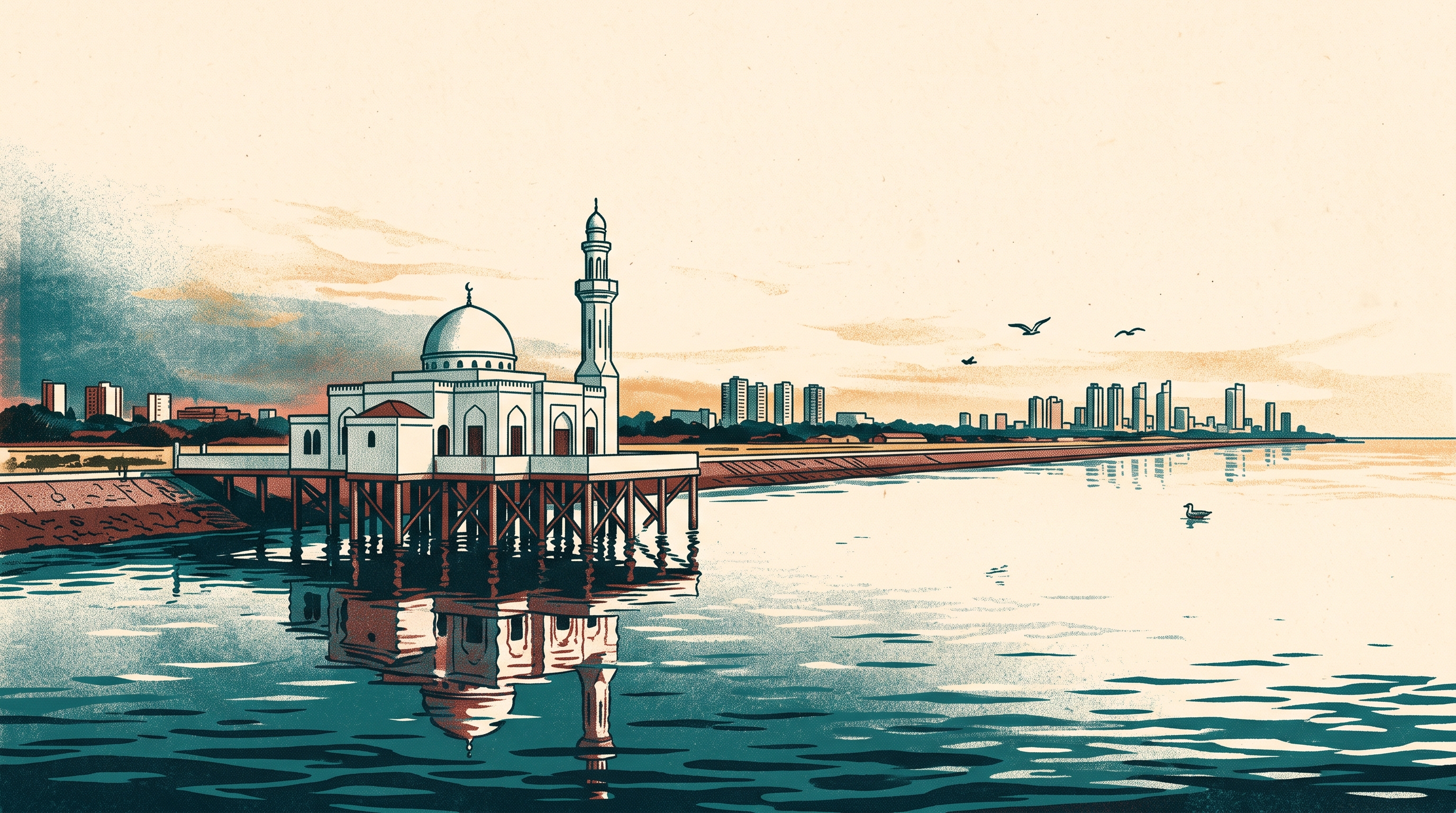
Melaka has been reclaiming land from the strait for decades. Long stretches of the seafront near the old town have been filled in, and the new ground now carries some of the city’s busiest roads and malls. The process has continued further out. The Straits Mosque stands on Pulau Melaka, a man-made island, and at high tide it appears to float on the water. It opened in 2006 and has become one of the most photographed buildings in the state.
Larger plans have come and gone. A vast scheme announced in the 2010s, to build a deep-sea port, marinas and a cruise terminal on a chain of reclaimed islands, promised to make Melaka a maritime gateway once again. It has spent much of its life stalled, revised and argued over. Whatever becomes of it, the impulse behind it is old. The city has always believed that its fortune lies on the water, and it has always been willing to build new ground to reach it.
The other direction
The future may run the other way. Melaka is a low-lying coastal city on one of the world’s busiest shipping lanes, and like every such city it faces rising seas, heavier rain and stronger storm tides. Much of its new coastline was engineered for the sea of the late twentieth century, and it replaced mud flats and shallows that once softened the force of the water.
Cities around the world are learning that the best defence against the sea is often the oldest: wetlands, mangroves and gently sloping shores that slow the waves and soak up floodwater. That suggests a different kind of reclamation. Not new land for towers and malls, but space given back so the coast can breathe. The difficulty is that a mangrove does not pay rent, and every hectare of shoreline in a growing city has someone who would like to build on it.
Drawing the line
Melaka will not stop being a port city, and it should not. Its whole history is about facing the water. But the coming decades will force a choice about what that means: whether the city keeps pushing its edge out into the strait, or learns to live with an edge that moves. The fishing families of the Portuguese Settlement, who have watched the water in front of their homes change within their own lifetimes, have been asking that question for years. It would be wise to listen to them.
Filed under the future tense
